Showing posts with label Thai. Show all posts

Tuesday, June 23, 2020

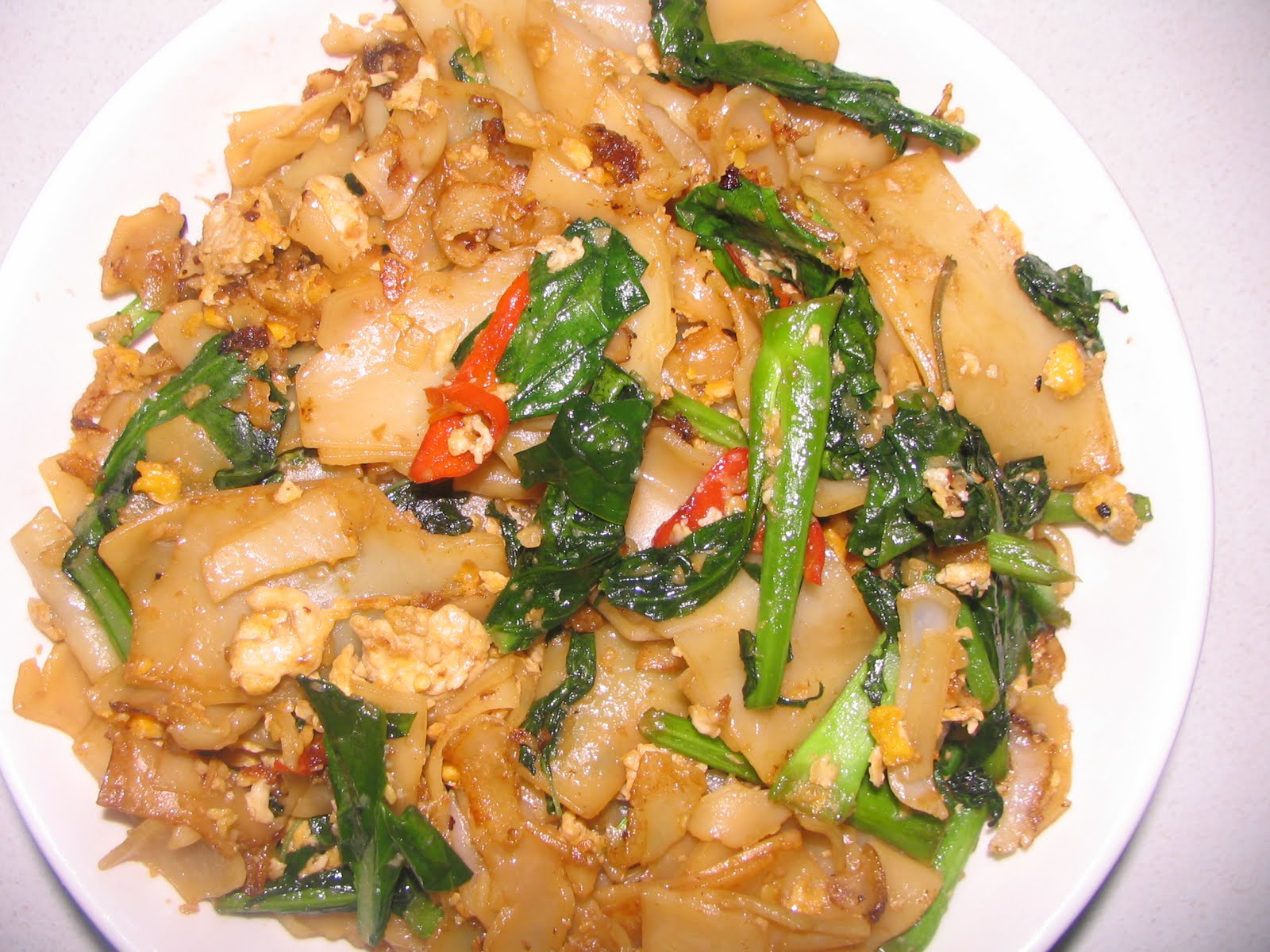
Pad Kee Mao - Thai Chilli Basil Noodles aka Drunken Noodles


Pad Kee Mao also known as Chilli Basil Noodles and also known as Drunken Noodles is a huge family favourite for us. I don't remember the first restaurant where I started relishing it - but has been on our orders during pretty much every visit to a Thai restaurant. No - there is no alcohol involved in the "drunken" noodle. The legend goes that some drunkard stumbled across this dish by accident and became very popular later on. Another story goes like Thai people made this after a night of hard partying. Of course definitely a great dish that could go very well with a nice cold beer. The best part of this dish is the aroma. This was the first recipe when I came to know that basil - thulasi (or tulsi) can be used in cooking. In fact you need what they call as Thai Basil or Holy Basil. Do not try this with the Italian basil - it's not going to be the same. Vegetarians - you can try making this with just the veggie ingredients but it's never going to be the same.

Ingredients
  1. Flat rice noodles - the fresh variety from an asian store - 500 gms
  2. Thai Holy Basil - you will need about a cup since you will need this during different stages of cooking.
  3. Garlic - 1 bulb
  4. Thai Bird's Eye Red Chilli - 8 - 10
  5. Shallots - thinly sliced - 1/3 cup
  6. Veggies - Sliced carrots, beans, some leafy vegetable
  7. Green pepper corn - 3-4 twigs
  8. Thinly sliced galanga - 2 table spoons
  9. Protein - I used prawns this time. One can use any thinly sliced meat or tofu.
  10. Fish sauce - 1 table spoon (got to be careful with this one) - Vegetarians feel free to skip. 
  11. Sugar - 2 tea spoons
  12. Dark Soya sauce - 2 table spoons
  13. Oyster sauce - 2 table spoon
  14. Any vegetable oil - 3-4 table spoons
Method
  1. Create a sauce mix with fish sauce, oyster sauce, soya sauce and sugar.
  2. Marinade the meat with a few tablespoons of sauce.
  3. Prepare the noodles as per the packet instructions. Some may need a blanch in boiling water.
  4. Pound the garlic and red chillies roughly.
  5. If not done already keep your vegetables sliced and ready. Once the process starts then there's no stopping. :)
  6. In a large wok heat a few table spoons of oil and saute the garlic-chilli mix.
  7. Add the shallots, galanga slices and the pepper corn twigs and saute for a minute.
  8. Add the prawns (or any meat) and saute until about 75% cooked.
  9. Add the stems of leafy vegetable, beans and carrots and saute for a minute.
  10. Add the remaining sauce and mix well.
  11. Add the noodles and mix well.
  12. Add the basil leaves and toss it around for about a minute.


Happy Cooking!!

C

Thursday, June 4, 2020

Prik Gaeng Ped - Thai Red Curry Paste


Add caption
Prik Gaeng Ped aka Thai Red Curry paste is a great condiment to have at home to make yummy Thai curries. A word of caution - once you have tasted home made curry paste you may not quite like the curry from your favourite Thai restaurant. There's not many ingredients involved but you will need to have a bit of patience if you want to do it the right way. But hey if you are after tasty food...who's looking at the clock. :)


Ingredients

  1. Red Chillies (Dried or Birds eye) - about 20 chillies 
  2. Lemon Grass - just the bottom white section finely chopped - 4-5 stalks
  3. Coriander stems - 15-20 stems finely diced
  4. Kaffir Lime leaves - 1/2 cup - ensure the middle stalk is removed
  5. Galanga - 200 gms - remove the skin and dice it up
  6. Garlic - 1 bulb
  7. Coriander seeds - 1 table spoon
  8. Cumin seeds - 1 table spoon
  9. Black Pepper seeds - 1 table spoon

The Method


  1. Soak the dry red chillies in hot water for about 30 minutes. Once soaked  remove the seeds and stalks from the chillies. Make sure you wear gloves for this step.
  2. Now comes the best part - just pound all of the ingredients in a mortar. This might take a good 30-40 minutes. You absolutely need this since the galanga and kaffir leaves need a good pounding before it gets to the next step.
  3. Once you have made a coarse paste blend it to a smooth paste in a blender with water used sparingly. 
  4. Once blended heat a wide sauce pan and pour about 1/4 cup of vegetable oil and sautee the blended paste for about 20-30 minutes with a teaspoon of salt until the paste is cooked and oil separates.
  5. You can refrigerate / freeze this paste once it has cooled down to room temperature. The last time I made it this lasted for a few months.
Enjoy!!

C

Sunday, August 12, 2018

Curry Fried Rice


Curry Fried Rice - when I shared the image on FB it triggered a lot of memories from my friends in Portland (Oregon). That's exactly what food can do and will do. My first introduction to this dish was at Eagle Thai in Portland. We had this ritual of having Thai for lunch for almost every Friday that Fridays became Thaiday. This Curry Fried rice was usually part of my 2nd serving shared with a good mate Satheesh. South Indian curry flavours have definitely influenced Thai food. Now I wonder if I should call it a Thai inspired pulao or Indian inspired Thai Fried Rice. Oh well...really doesn't matter. Now this dish is a great example for best of both worlds. Over the years I've eaten this in various names and different mixers such as crab meat, pineapple etc. Go for it - create your own version. So without much further ado...


Ingredients

  1. Steamed Rice - I used Basmati rice but preferably Jasmine rice - 1 cup per serving
  2. Beaten Eggs - 1 per serving
  3. Diced mixed vegetables (carrots, peas, corn) - 1/2 cup per serving
  4. Minced garlic about 1 tea spoon per serving
  5. Diced red onions - a handful per serving
  6. Curry Powder - Now you can buy ready made curry powder like Ayam's Curry powder or you can make your own by mixing turmeric powder with garam masala (which is what I did). You can use a ratio of 1:2. Turmeric is really important to bring out the colour and the flavour.
  7. Seasme oil - 1 tablespoon to season the wok
  8. Soya sauce - preferably light - 1 table spoon per serving
  9. Vegetable oil - 2 tablespoons per serving
  10. Salt to taste
  11. Chilli powder  - to taste

The Method

  1. Heat a large wok until it starts smoking.
  2. Pour the seasme oil and swirl around to give the wok a nice coating.
  3. Pour the vegetable oil and let it heat up.
  4. Pour the beaten eggs and scramble it up.
  5. Add the garlic and onions and saute for a few minutes (if you want to add any type of meat - now would be a good time to do so and saute until cooked well)
  6. Add the vegetables and the curry powder, chilli powder and salt and saute for a few minutes
  7. Add the soya sauce and saute until mixed well.
  8. Add the rice and sprinkle a few table spoons of water over the rice
  9. Toss it up well until the rice and the veggies get mixed up well.
Serve hot with a few slices of cucumber to balance your palate. 


Happy Cooking !!

C

Monday, July 6, 2015

Gai Pad Krapow - Chilli Basil Chicken

Basil - a leaf limited to religious and maybe medicinal purposes in Indian lifestyle add so much flavour to a dish especially Thai and Italian. One of my favourite Thai dishes - stir fried Chilli Basil Chicken came to fruition today at Chetty's kitchen. All necessary ingredients fell into place today and there was no reason not to try. There's something about the Thai birds eye red chilli. It simply couldn't be replaced by any other type of chilli and the flavour just doesn't happen. No wonder these 2 ingredients Basil & Chilli make a dish by itself.

What goes in: 
1) Thinly sliced Chicken breast meat
2) Thai Red Chillies
3) Holy Basil Leaves
4) Onions
5) Garlic
6) Fish Sauce
7) Dark Soy Sauce
8) Sugar
9) Corn flour water (optional)


The Method

1) Heat a wok with a few tablespoons of vegetable oil - any oil for that matter.
2) When hot toss in the chicken and toss it around until the pinkness goes away.
3) Mix in the garlic, chillies, few tablespoons of fish sauce, 1 table spoon of soya sauce, 1 teaspoon of sugar and fry for about a minute.
4) Toss in the onions and toss for a few minutes until the onions become slightly translucent.
5) Add in the basil leaves and toss for a minute.
6) If you need a extra sauce (or volume), add more water and corn flour water. You may need to add more fish sauce / salt as necessary.

Serve it hot with jasmine rice. 

Voila - Gai Pad Krapow Ready!!


Enjoy Cooking!!

C

Friday, August 10, 2012

Gaeng Daeng Goong -Thai Red Curry with Prawns

Gaeng Daeng Goong or Red Curry with Prawns is yet another staple of Thai curries. When I was first introduced to Thai cuisine I was told that it was the closest I can get to Indian curry (apart from an Indian restaurant). Of course sometimes even Indian restaurants (outside India) don't get close to what actual curries are meant to taste like. If you look at the ingredients used to make the Red Curry, it is no surprise that it tastes like an Indian (South Indian to be precise) curry. Especially the ones such as coriander seeds, cumin seeds, black pepper, garlic. Of course there are a few ingredients that can make any dish Thai - lemon grass, galangal and kaffir lime leaves. You sure can buy the  paste in a store, as with any packaged food, it's just not the same if not made at home. Once done the curry paste can be stored frozen for months and used for a variety of dishes.

Ingredients:

Red Curry Paste

  1. Dry Red Chillies - 20 chillies
  2. Lemon Grass - just the bottom white section finely chopped. - 8 stalks
  3. Coriander stems - 15-20 stems finely diced
  4. Kaffir Lime leaves - 1/2 cup - ensure the middle stalk is removed
  5. Galanga - 200 gms - remove the skin and finely chopped
  6. Garlic - 1 bulb
  7. Ground Coriander, Cumin and Pepper seeds - 1 tablespoon each

Curry

  1. Prawn (or Shrimp if you are in the USA) - 500 gms
  2. Baby corn - 200 gms
  3. Bamboo shoots - 1 can
  4. Curry paste - 4-5 tablespoons
  5. Coconut cream - 1 can
  6. Sugar - 2-3 tea spoons
  7. Fish sauce - 4-5 tablespoons (vegetarians might replace this with salt)
  8. Thai basil leaves - 1/2 cup


The Method

Curry Paste


  1. Soak the dry red chillies in hot water for about 30 minutes. Once soaked  remove the seeds and stalks from the chillies. Make sure you wear gloves for this step.
  2. Blend the ingredients above for the curry paste. I first smashed them in a mortar before transferring the content to a blender. Use minimum water just enough to get the blender going.
  3. Once blended heat a wide sauce pan and pour about 1/4 cup of vegetable oil and sautee the blended paste for about 20-30 minutes until the paste is cooked and oil separates.
  4. You can then freeze the paste (once it has cooled down to room temperature) and store it for a few months.

Prawn Curry

  1. If the curry paste is frozen - first thaw it to room temperature.
  2. Wash the bamboo shoots (from the can) with cold running water to remove the salt content in the can.
  3. In a large wok heat about 4-5 tablespoons  of vegetable oil and saute the curry paste until oil separates.
  4. Add about half of the coconut cream and mix well and bring the mixture to a boil.
  5. Add the baby corn and bamboo shoots and cook for about 5 minutes until the bamboo shoots become tender.
  6. Add the prawns and cook for a few minutes until they curl up and turn pink.
  7. Add the sugar, fish sauce and basil leaves, mix well and simmer for a few minutes.
  8.  Serve hot with steamed jasmine rice.


Happy Cooking !!

C

Sunday, July 17, 2011

Khao Pad Tom Yum (Tom Yum Fried Rice)

Many have enjoyed the hot and sour Tom Yum soup, but this one is a fried rice with Tom Yum. Recently tasted this in a Thai restaurant in Sydney (@Bangkok) and found it to be a very interesting combination. One could call it the Thai Puliyogare for the sour taste. Apparently this is a popular dish in Thailand just not too popular in the westernized restaurants.


What goes in:

1) Tom Yum paste - just get it from the store. I think it's too much of a hassle if you need to make it on your own. And yes this has shrimp paste in it not sure if there is a veggie version of this.
2) Jasmine Rice (Cooked at least 6 hrs in advance)
3) Kaffir leaves
4) Bamboo shoot
5) Bean sprouts
6) Chives
7) Garlic
8) Mixed vegetables
9) Eggs
10) Thai Red chillies

The process:

1) Heat up a wok to as high a temperature as possible.
2) Add a generous amount of oil and wait for the smoke to come out of the oil.
3) Break open the eggs and stir quickly for a good scrambled fried egg.
4) Add the garlic, chillies and Tom Yum paste and stir well for about a minute.
5) Add the mixed vegetables and bamboo shoots and give it a stir for about 2 minutes.
6) Add the chives and kaffir leaves, give it a short stir.
7) Add the boiled Jasmine rice and give it a good mix. Add more tom yum paste if needed (not smelling the flavour enough?).
8) Add fish sauce as required to the amount of saltiness you need.
9) Toss in the bean sprouts for a final stir.

Tom Yum Fried Rice - Done!!


Enjoy!!

C

Monday, June 13, 2011

Pad Thai

Hello,

Alvin - This one is for you. The one who asks for 2 * Pad Thai @ Eagle Thai!! Pad Thai is what made me fall in love with Thai food. Especially the one at Eagle Thai - Pad Thai in Tomato sauce - 5 * (at times over the scale). Since then Pad Thai has been my dip stick to measure my likingness to any new Thai restaurant I try. If the Pad Thai is good then the other dishes can't be that bad. The version below may not be the typical recipe for Pad Thai. It's a mix and match of many recipes I have seen. Some claim that Pad Thai is actually not a Thai dish - but guess what - who cares!!

What goes in:

For the sauce:
1) Tamarind puree
2) Fish sauce (can substitute with soy and salt)
3) Peanut butter (smooth)
4) Tomato sauce (ketchup)
5) Palm sugar (ordinary sugar would do as well)


Other stuff
1) Flat rice noodles - thin variety
2) Egg
3) Dried prawn (shrimp)
4) Pickled turnips (this is the signature ingredient)
5) Prawn - preferably raw (can substitute with chicken, tofu or any other veggie)
6) Chives (substitute with spring onions)
7) Bean sprouts
8) Ground peanuts (roasted)


The procedure:

1) Mix the ingredients of the sauce together and make a paste. The quantity of each of this ingredient would make or break the taste of Pad Thai. Happy experimenting.
2) Boil the rice noodles. Make sure it is not too soft that it breaks apart or gets mushy mushy.
3) Heat a large wok and add a few tablespoons of oil.
4) Break in an egg and scramble fry it.
5) Add the dried prawns and turnips and saute for a few minutes.
6) Add the mixed sauce and saute for a minute or 2.
7) Add the prawns and cook them until they just turn red.
8) Add the noodles and add some more fish sauce. Remember to sprinkle some water if the noodles gets too sticky.
9) Mix well for a few minutes.
10) Add the chives.
11) Add bean sprouts and garnish with roasted peanuts.

Some serve with a wedge of lemon - personally I never preferred that.


Happy Cooking!!

C


Wednesday, April 20, 2011

Gaeng Kieow Waan - Thai Green Curry

Green Curry - this is something that I just made some memories with. Every time I see that in a Thai menu, I have invariably skipped it. Probably the colour was not too appealing. However a few months ago had an opportunity to have a taste of it (of course at Saap Thai!!). The colour is just so misleading. This time I attempted a green curry from the scratch.

Things needed for the curry paste:

a) Coriander leaves and stems (Cilantro for those in the US of A) - This is what actually gives the colour to the curry.
b) Lemon Grass
c) Kaffir lime leaves
d) Galanga root
e) Green chillies
f) Garlic

Traditionally you are expected to make a paste out of the above ingredients in a mortar and pestle. Which I did this time. However, at the end I cheated by running it through the blender once to make it a smoother paste.

Other ingredients:

1) Thai egg plant - This is a must to make this authentic. In case you don't...nah...don't bother. :-)
2) Chicken (or any other meat or non-meat chunk)
3) Fish sauce
4) Coconut milk

The method:

1) Sautee the green curry paste in oil for about 3-4 minutes.
2) Add about half a cup (or half of whatever you have) of coconut milk and mix for about a minute.
3) Add chicken (or anything else you need to cook well) and cook for about 5 minutes.
4) Add the egg plant and cook for about 10-15 minutes.
5) Add fish sauce (or salt) to taste.

At first I was not impressed with the flavour so added a little more of:
a) Kaffir leaves
b) Grated galanga root
c) Fish sauce

The Kaffir and Galanga brings out the typical Thai flavours in any curry.

The output:


The looks as I said earlier may not be too appealing - but if you like Thai food...then you must try this.

Enjoy...

Tuesday, April 19, 2011

Pad See Eew Kee Mao


Pad Kee Mao Vs Pad See Eew - I've come up with my own concoction "Pad See Eew Kee Mao ". Pad see eew does not have basil. The key ingredient there is the choy sum spinach and of course flat noodles and dark soy sauce. Pad kee mao does not usually have the greens or the egg. However I always mix them both when I order my lunch at Saap Thai (Eagle Thai in Sydney) and hence this recipe. If I were to have a garden, there will be 2 plants that are mandatory - Curry Leaves & Basil Leaves. I keep mixing with Italian Basil / Sweet Basil and Thai basil / Hot Basil. Not able to figure out the differences (yet).

What you need:


  1. Flat Rice noodles (preferably the fresh one)
  2. Minced garlic
  3. Choy sum  (or any other type of spinach with stems). The leaves and stems have to be separated.
  4. Soy Sauce
  5. Fish Sauce
  6. Kecap Manis (Gives you the colour and the sweetness)
  7. Oyster Sauce
  8. Sugar
  9. Eggs
  10. Basil leaves
  11. Thai Red Chillies
Note: Vegetarians feel free to skip the fish and oyster sauce. 


The method:

  1. I had bought the fresh flat noodles - the uncut version. It looked like a rice dhoti. Had to cut them to the size I wanted. Made  2" x8" (approximately) strips.
  2. Rinse the noodles under warm water and separate them out.
  3. Chop the veggies as in the photo above. Most important is to have the choy sum leaves and stems separate.
  4. Heat a large wok on high heat and pour a generous amount of oil and swirl it to coat the wok.
  5. NOTE: From this point on just use what you need for 1 - 1.5 servings. Do not try to cook for the whole party in a single go. It is time consuming...but definitely worth the effort!!!
  6. Add garlic and the chillies and give a quick stir. Care to be taken not to burn the garlic.
  7. Add the choy sum stems and stir fry for about a minute.
  8. Add the choy sum leaves and stir fry until they wilt a little bit - but not too much. You need to maintain the crunch of the leaves and not let it become wimp and soggy.
  9. Add the flat noodles, the sauces and sugar.
  10. Stir fry the contents  for about a minute until the sauces gets mixed evenly and the noodles are all separated. If the noodles are too sticky feel free to add a few tablespoons of water which will help separate them out. (And also create a sizzle to add to give you a restaurant effect.)
  11. Move the noodles to the side and create a space in the centre of the wok. Break open the eggs and create a scramble. Once the eggs are 3/4th cooked mix in the noodles.
  12. Toss in the basil leaves and give a quick stir for about a minute.
The Result:

Enjoy...

C


Sunday, April 10, 2011

Kao Pad Krapao - Che

Ok...I am not using some swear words here. The title basically means Veggie fried rice with basil (in Thai).


Amongst the various varieties in Thai fried rice, this one has been the most widely available dish in US and Aussie. Am yet to figure out the Curry Fried Rice that Eagle Thai dished out and I've never been able to get the same dish anywhere else. I've tried requesting the same in many Thai restaurants, but most often have been rejected. Probably it is not too authentic? I've attempted to make that myself a few times, but haven't reached there yet. :(

Chilli Basil Fried rice - usually made with chicken, this time I had made it with veggies and egg.

Ingredients:

Jasmine Rice (Any other rice will not get you the same effect)
Thai Red Chillies
Garlic
Basil Leaves (A generous bunch)
Veggies (typically, carrot, peas and corn)
Red Onions
Capsicum (preferably red)
Eggs
Fish Sauce
Soya Sauce

The method:


  1. Pre-cook the jasmine rice at least about 3-4 hours prior to making this fried rice. Many people do suggest the previous day's rice. However in the interest of time as long as the rice is not warm (rather cold to touch) it is good enough. 
  2. Sautee the chopped / smashed garlic and red chillies in a generous amount of oil on low/medium heat for about 15-20 seconds.
  3. Add the veggies except capsicum (with the wok in High head). If you prefer meat, this would be a good time to add. Stir fry the mix to an extent where your main ingredient (veggie/meat) is cooked enough.
  4. Add the cold rice to this mix along with fish sauce and soya sauce. The amount of fish sauce needs to be taken care. You will need to get the strong smell of fish sauce at this time.
  5. Mix up the contents for about less than a minute.
  6. Separate the rice and create a gap in the middle of the wok / kadai. Add some oil and break open the eggs. Try not to beat the egg in advance for a  Thai fried rice. 
  7. Once the eggs are 3/4th cooked, mix in the rice and stir fry along with the remaining capsicum and basil leaves.
  8. The smell of the fish sauce should now give way to the aroma of the basil leaves.
  9. Kao Pad Krapao is now ready to be served.
  10. Yes, you can garnish with coriander leaves (Cilantro for those in the US of A) if you would like. 
Enjoy

C
Potential Bloopers:
  1. Rice gets too sticky and soggy. When the rice (or noodles) gets too sticky in the kadai while mixing, a few ml of water added helps to loosen up the starch and separate out the rice.
  2. Fish sauce not enough. This did happen to me where I was out of stock for the amount of rice I had thought of.
  3. Watch out on the Thai red chillies. They are dynamite. :-)

Thursday, March 17, 2011

Pad Kee Mao

Swaa dee khrap (Hello in Thai)

If there is one cuisine that I fell flat apart from Indian that is Thai (those who knew me since 2000 should know this by now). My romance with Thai food definitely didn't start on a good note. The very first time I tried Thai was in NYC in the summer of 1999. It was my very first onsite trip to US and someone suggested Thai food as the closest to Indian food (thinking I would miss Desi food!!). The 2nd attempt at Eagle Thai also went belly up. I almost decided never to go back to Thai food again. What a disaster that would've been!! Thanks to a good old boss of mine,  I was introduced to Thai again with the right dish to be ordered - Pad Thai. From that point on there was no looking back. The only time I had a long break from Thai since 2000 was the few months I was in Bangalore.

I have been experimenting with Thai food in the last few months. Today I lost myself  when I stepped into Thainatown in Sydney. But more about that later. Today's dish - Pad Kee Mao has been a good mood enhancer. Not sure if that is what people call as "soul food". Life can't be bad after a good Pad Kee Mao from Saap Thai. :-) Had that for lunch today and while that taste was still lingering tried out at home as well.

What went in:


  • Basil leaves
  • Choy sum (Some kinda spinach) (the stem and leaves to be separated)
  • Broccoli
  • Chicken
  • Eggs
  • Bamboo shoot strips
  • Garlic
  • Bird eye chillies
  • Oyster sauce
  • Kecap Manis
  • Sugar (very little a tea spoon per serving)
  • Soy sauce
  • Fish Sauce
  • Cooked Rice noodles (the wider variety)
The result:


The method:


  1. In a fuming hot wok, add a generous amount of oil and sautee the garlic and chillies for a few seconds.
  2. Add in the chicken pieces. The chicken pieces have to be small enough to cooked under a minute or so.
  3. Add in the Choy sum stems and bamboo shoots and sautee.
  4. In a little while add the Choy sum leaves, broccolli and any other veggie that intend to add.
  5. Add in a bit of fish sauce at the moment when the chicken and veggies are being cooked.
  6. Add the noodles. Care to be taken not to over do this part. (I repeated this process 3 times for the amount of food I wanted to cook.) Roughly limit to only what you need for 1 serving.
  7. Add all the sauces you have in your pantry (not tomato sauce though!!) and some sugar.
  8. The distinctive "aroma" of the fish sauce should come out at this point.
  9. Stir fry the noodles a bit to mix the sauces evenly.
  10. Add the basis leaves and stir it for a minute.
  11. Create a space in the center of the wok and break in an egg (or 2 if you chose to).
  12. Stir fry the egg and mix in the noodles after the egg is about 90% cooked.
Potential Bloopers
1) Don't over cook the noodles. The result will be a dry kanji (dry porridge).
2) Watch out on the fish sauce, it can come out to be too salty.

Happy Cooking!!